If you are thinking about living near Fort Greene Park, you are probably looking for more than a nice view. You want to know how the area actually feels on a regular Tuesday, a busy Saturday, or a quiet evening walk home. Around Fort Greene Park, daily life is shaped by green space, historic blocks, cultural destinations, and easy transit. Let’s dive in.
Park Life Shapes the Neighborhood
Fort Greene Park is not a tiny patch of grass tucked between buildings. It is a 30.17-acre community park with winding paths, sloping lawns, mature trees, and a monument area connected to the Prison Ship Martyrs. The park still reflects much of its 1867 Olmsted and Vaux redesign, which helps give it a layered, historic feel.
That matters when you live nearby because the park becomes part of your routine. You are not just passing it on the way somewhere else. You are likely using it for a morning walk, a stretch on the lawn, a meetup with friends, or a quick break between errands.
NYC Parks lists a strong park condition score of 91, along with 760 mapped trees and $15 million in recent investment. There is also an active capital project focused on entrances, paths, plaza areas, and drainage infrastructure. In practical terms, that points to a park that is actively maintained and treated as an important public space.
What a Typical Weekend Feels Like
One of the clearest signs of life around the park is the Fort Greene Greenmarket. It runs every Saturday, year-round, from 8:00 a.m. to 3:00 p.m. at Washington Park between DeKalb and Willoughby Avenues, right outside a park entrance.
The market has been part of the neighborhood since 2003. GrowNYC notes that it includes compost and clothing collection, cooking demos, family activities, and SNAP/EBT acceptance. That gives the area a rhythm that feels useful as well as social.
You also see how the park functions as a gathering place through programming. The Fort Greene Park Conservancy calendar includes free fitness classes, a run club, and storytime with Brooklyn Public Library, along with events like Movies on the Lawn and Poetry in the Park. This is one reason the area feels active without feeling manufactured.
Everyday Convenience Inside the Park
Living near a park is more enjoyable when the space works well for real life. The park’s Visitors Center is open seven days a week from 8:00 a.m. to 4:00 p.m. and offers restrooms, a filtered water station, interpretive signs, and periodic monument tours.
There are also a few realistic details worth knowing. The lawns are sometimes fenced for seasonal maintenance, and Fort Greene Park does not have a dedicated dog run because of its landmark status. If you have a dog, that is an important part of the day-to-day picture.
Historic Blocks and Stoop Culture
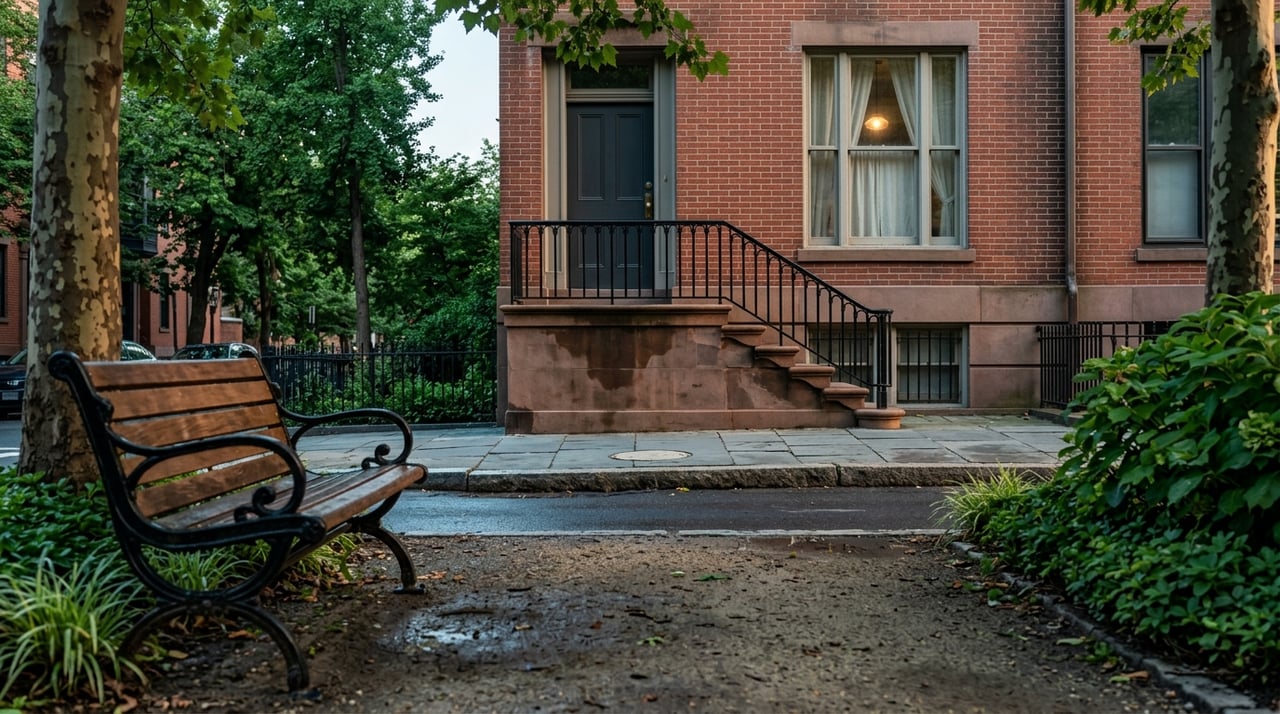
The streets around the park are a major part of the appeal. Much of this area sits within the Fort Greene Historic District, which the New York City Landmarks Preservation Commission designated in 1978. City planning materials describe the district as spanning 19 blocks and recognized for its architectural merit and historic integrity.
The housing stock helps create a very specific neighborhood feel. Preservation materials describe a 19th-century Brooklyn residential district with Italianate, Queen Anne, and Neo-Grec brownstone and brick row houses built mainly between 1855 and 1875.
Those details are not just architectural trivia. Tall stoops, decorative ironwork, doorway surrounds, and cornices all shape how the blocks look and how people experience them. The result is a streetscape that feels visually consistent, walkable, and deeply tied to Brooklyn’s historic fabric.
Why the Blocks Feel So Social
When people talk about Fort Greene having stoop culture, the architecture helps explain why. Row houses with raised entries and front steps naturally create a more visible connection between private homes and public sidewalks.
That does not mean every block feels the same, but it does help support a more neighborly, front-of-house street life. Around Fort Greene Park, preserved block fronts and tree-lined streets often make everyday walks feel like part of the neighborhood experience, not just a commute.
Fort Greene’s preservation culture is also active today. The Fort Greene Association began in 1973 to help preserve the neighborhood’s 19th-century architectural heritage. Nearby, FAB Fulton describes the Fulton Street district as a place of small businesses, historic architecture, tree-lined streets, and a welcoming community.
Culture Is Part of Daily Life
One of the biggest differences between living around Fort Greene Park and living near a park in a quieter area is what surrounds it. Here, the park sits within a dense cultural corridor, so green space and city life are closely connected.
BAM, at 30 Lafayette Avenue, identifies itself as America’s oldest performing arts center. BRIC House, at 647 Fulton Street, sits among other well-known arts institutions in the Brooklyn Cultural District, including BAM Harvey, the Mark Morris Dance Center, and Theatre for a New Audience.
For you as a resident, that means entertainment and creative energy are woven into the neighborhood. A walk from the park can easily turn into a bookstore stop, a performance night, or an afternoon coffee near a cultural venue.
Third Places Make It Feel Lived-In
Fort Greene also benefits from smaller, everyday destinations that make a neighborhood feel rooted. MoCADA’s local footprint includes MoCADA Cafe at 10 Lafayette Avenue and Ubuntu Garden at 48 Lafayette Avenue. The Center for Fiction is at 15 Lafayette Avenue, and Greenlight Bookstore’s Fort Greene shop is at 686 Fulton Street.
These kinds of places matter because they give you options beyond home and work. They create space for a casual coffee, a browse through new books, or a simple reason to stay local on the weekend.
The Mark Morris Dance Center, at 3 Lafayette Avenue, adds another layer. It serves as a Brooklyn cultural hub with classes for adults as well as youth and family programming. Nearby spots like Miss Ada on DeKalb Avenue and The Good Batch Bakery on Fulton Street help round out the neighborhood’s restaurant and bakery scene.
Fulton Street Adds Practical Energy
A park can make a neighborhood attractive, but it is the surrounding commercial life that often makes it easy to live in. Around Fort Greene Park, Fulton Street helps provide that everyday backbone.
FAB Fulton says the corridor is home to more than 300 businesses. It is also served by subway access along Fulton Street and Lafayette, plus bus lines through the area. That gives the neighborhood more than charm. It gives it convenience.
For buyers, renters, and longtime owners alike, this matters. You can enjoy the beauty of the park and the historic blocks while still having a real commercial spine nearby for daily needs, errands, and regular city life.
Transit Is a Real Advantage
If you need to get around Brooklyn or into other parts of New York City, Fort Greene’s location is a major plus. Official directions for nearby institutions point to multiple stations and lines within reach.
These include 2, 3, 4, and 5 trains at Nevins Street, B, Q, and R trains at DeKalb Avenue, the C train at Lafayette Avenue, the G train at Fulton Street, and broader access through Atlantic Terminal. MTA materials also identify Atlantic Avenue-Barclays Center and Fulton Street as key nearby hubs in the greater downtown Brooklyn and Fort Greene area.
That range of transit options can make daily life more flexible. Whether you are heading to work, visiting friends in another borough, or planning a quick trip across Brooklyn, the neighborhood supports a car-light lifestyle.
What to Know Before You Move
Living around Fort Greene Park has a lot going for it, but a realistic picture is always more useful than a polished one. The park is actively stewarded by the Fort Greene Park Conservancy in partnership with NYC Parks and local communities, which helps explain why it functions as a true neighborhood anchor.
At the same time, park use comes with normal public-space realities. Seasonal lawn closures for maintenance can affect where you sit or gather, and dog owners should know there is no dedicated dog run within the park because of landmark restrictions.
That balanced view is important if you are comparing neighborhoods. Fort Greene Park offers beauty, programming, and civic energy, but it also works like a real urban park with active stewardship and shared use.
Why Fort Greene Park Living Stands Out
What makes living around Fort Greene Park special is the combination of factors, not just one feature on its own. You get a substantial, historic park with regular programming, a well-known Saturday greenmarket, architecturally rich residential blocks, and a strong cultural and commercial network within walking distance.
In many neighborhoods, you have to choose between quiet charm and city convenience. Around Fort Greene Park, you often get both at once. That mix is a big reason the area continues to attract people who want a neighborhood that feels grounded, connected, and distinctly Brooklyn.
If you are considering a move in Fort Greene or want help understanding how different blocks and building types fit your lifestyle, the Martinez Team can help you navigate your options with clear, local guidance.
FAQs
What is daily life like around Fort Greene Park?
- Daily life around Fort Greene Park often includes regular park use, walkable access to cultural destinations, nearby small businesses, and a strong Saturday routine centered on the Fort Greene Greenmarket.
Does Fort Greene Park have amenities for everyday use?
- Yes. Fort Greene Park has a Visitors Center open daily from 8:00 a.m. to 4:00 p.m. with restrooms, a filtered water station, interpretive signs, and periodic monument tours.
What kind of homes are near Fort Greene Park?
- Many nearby blocks are within the Fort Greene Historic District and feature 19th-century brownstone and brick row houses in styles such as Italianate, Queen Anne, and Neo-Grec.
Is Fort Greene Park good for dog owners?
- It can still be part of your routine, but Fort Greene Park does not have a dedicated dog run because of its landmark status.
How convenient is transit near Fort Greene Park?
- Transit access is one of the area’s strengths, with nearby service that includes the 2, 3, 4, 5, B, Q, R, C, and G trains, plus access through Atlantic Terminal and bus routes in the area.
What makes the area around Fort Greene Park feel distinct?
- The neighborhood stands out for its mix of park-centered living, historic streetscapes, cultural institutions, local businesses, and strong transit connections within a compact area.