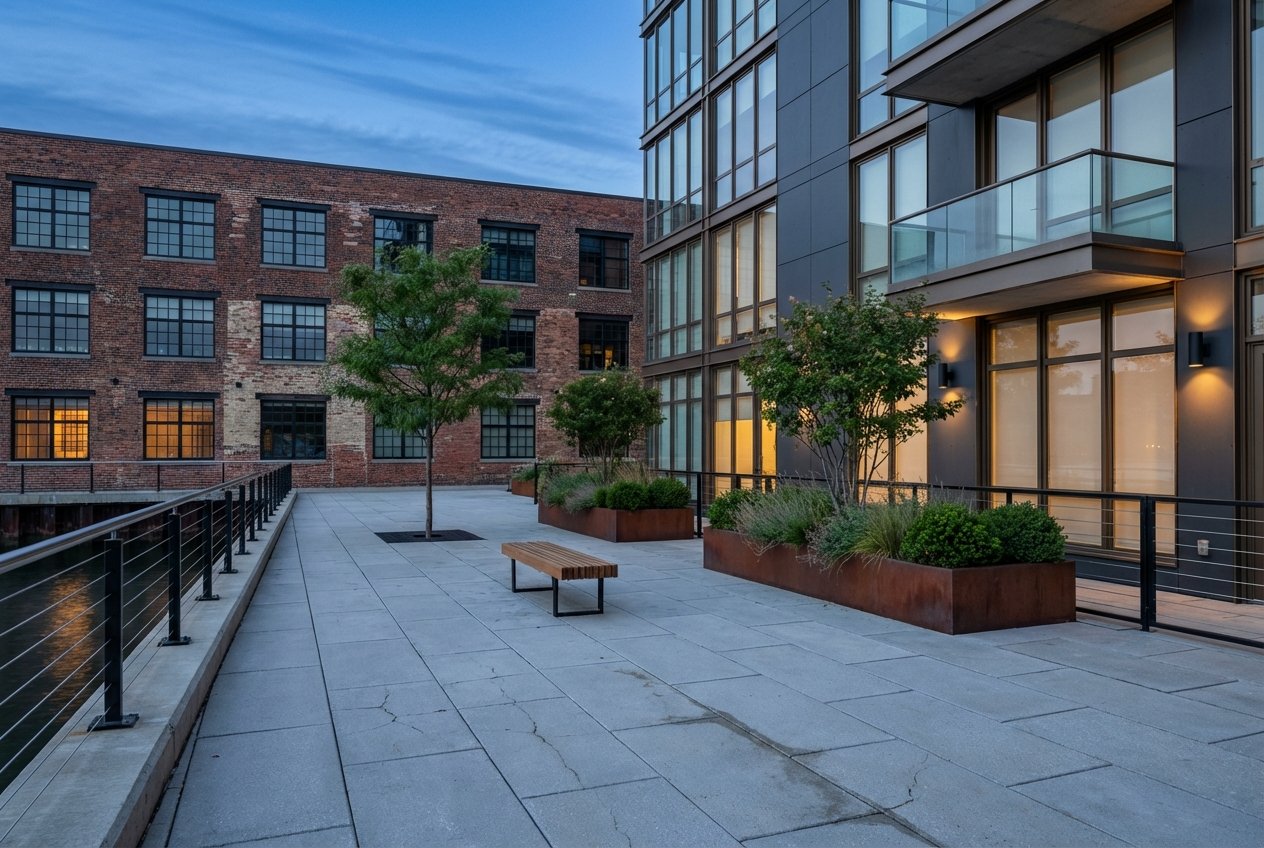
If you want river views without Midtown’s pace, Greenpoint’s waterfront might be your sweet spot. You get new parks, modern buildings, and a creative, low-key vibe that still feels distinctly Brooklyn. In this guide, you’ll learn where to find the best skyline views, how the newest developments fit together, what to expect from prices and amenities, and how to navigate transit. Let’s dive in.
Greenpoint waterfront today
The Greenpoint shoreline has transformed from working docks to a connected ribbon of housing and public space. A series of master-planned parcels, stand-alone towers, and renovated parks now anchor the neighborhood along the East River. The result is a mix of modern buildings with amenities, small-to-medium parks, and an evolving esplanade that links India Street to emerging stretches north and south.
Big-picture buildout
The largest force on this edge is Greenpoint Landing, a roughly 22-acre master plan by Park Tower Group. When fully built, it is projected to deliver about 5,500 homes and several acres of public waterfront access. Recent milestones include 35 Commercial Street, which opened 374 permanently affordable apartments as part of the plan. You can see the city’s emphasis on income-targeted housing in the official update on those new affordable homes at Greenpoint Landing.
Signature towers to know
A few buildings stand out on the skyline. Eagle + West brought a pair of sculptural towers to the water with a modern amenity package and access to the esplanade. Just south at 1 Java Street, Lendlease delivered The Riverie, spanning a full block with hundreds of rentals, new public open space at the water’s edge, and a sustainability-forward, all-electric design supported by a vertical closed-loop geothermal system. Get a feel for the developer’s approach on The Riverie’s project page.
Parks and skyline views
Your everyday Greenpoint waterfront experience is shaped by intimate parks, lookouts, and a growing promenade. These are the spots locals use for sunsets, quick workouts, and weekend picnics.
Transmitter Park highlights
Transmitter Park, set at Kent Street and West Street, delivers one of North Brooklyn’s best Manhattan-skyline vantage points. It features a lawn, a playground, and a pedestrian pier where you can watch boat traffic or frame a sunset photo. For a design snapshot and site history, explore WXY’s Transmitter Park and pier.
Bushwick Inlet and new esplanades
To the south, Bushwick Inlet Park adds athletic fields, a community building, and expanding waterfront access along the Williamsburg-Greenpoint edge. As new buildings finish on the Greenpoint side, short esplanade links and pocket parks open in phases, often with seating oriented to skyline views. Portions delivered by developers are later dedicated to the city for public use. Always check park hours and the current status of any new segment before planning a visit.
Homes and housing types
Greenpoint offers a genuine range of homes, from historic brownstones to glassy towers. Your decision comes down to tradeoffs among character, amenities, and views.
Historic blocks and lofts
Inland streets showcase prewar brownstones and modest walk-ups, including parts of the Greenpoint Historic District. You will also find pockets of converted industrial buildings that echo the neighborhood’s maker roots. These homes often trade large amenity lists for high ceilings, brick textures, and classic street charm.
New towers on the river
On the water, the story shifts to mid- and high-rise buildings with direct skyline views and full-service offerings. Examples include The Riverie at 1 Java, 21 India Street, and towers within the Greenpoint Landing plan. Some buildings are entirely market-rate, while others are mixed-income or fully income-targeted as part of the city’s housing goals.
What amenities look like
Most new waterfront properties lean into convenience. Expect options like on-site staff, package rooms, bicycle storage, indoor-outdoor fitness, lounges, and roof decks oriented to the skyline. By contrast, older walk-ups and loft conversions may not have doormen or gyms, but they deliver character and neighborhood texture that many buyers prioritize.
Prices and affordability
Prices and rents here reflect waterfront appeal and limited view inventory. Rental trackers frequently show Greenpoint’s median studios in the low-to-mid $3,000s and one-bedrooms at $4,000-plus in recent snapshots. You can scan a current reading in Zumper’s recent Greenpoint snapshot. For sales, neighborhood portals have reported an aggregated median around $1.5M, varying by property type and timing. These figures change month to month, so use them as directional signals rather than fixed rules.
Affordable housing is part of the waterfront’s long-term plan. Greenpoint Landing includes significant income-targeted and permanently affordable buildings delivered with city partners. A recent example is 35 Commercial Street’s 374 affordable homes highlighted in the official HPD release. If you are exploring income-restricted options, watch NYC Housing Connect for future lotteries and confirm eligibility bands and deadlines.
North vs. South Greenpoint
The neighborhood splits into two complementary experiences.
- North Greenpoint: Closer to the water and India-Java corridor, with master-planned parcels, active construction in spots, larger buildings, and direct skyline views. You get new parks and longer amenity lists in exchange for a more contemporary, planned feel.
- South Greenpoint: Around Manhattan Avenue and Franklin Street, you will find lower-scale streets, independent shops and bakeries, and proximity to McCarren Park on the Williamsburg line. Views are more interrupted inland, but the vibe reads as village-scale and walkable.
Your best fit depends on priorities. If uninterrupted sunsets and modern common spaces are must-haves, the north and waterfront edge will speak to you. If you prefer classic blocks and established local retail, you will likely gravitate south and inland.
Getting around
Greenpoint’s subway spine is the G line, with stations at Greenpoint Avenue and Nassau Avenue. The G is a crosstown Brooklyn-Queens service that does not enter Manhattan, so most Manhattan trips require a transfer. For a one-seat ride on the water, the NYC Ferry East River route stops at India Street, connecting to DUMBO, Wall Street, and East 34th Street depending on the schedule. The ferry is scenic and comfortable, but always check real-time updates before commuting.
If you are planning daily subway travel, map your transfer points and walking routes to nearby lines. Some residents pair the G train with biking to reach the L or M, or they rely on the ferry during good-weather months and switch to subway-bus combos in winter. For station details, see the Nassau Avenue station overview.
What to know before you tour
Use this quick checklist to align expectations with reality.
- Views and orientation: Not all river-adjacent homes have direct skyline vistas. Ask about floor height, exposure, and any planned buildings that could impact your line of sight.
- Amenities vs. character: New towers offer full-service living. Historic and loft spaces offer charm, scale, and texture. Decide which tradeoff matters more day to day.
- Construction and phasing: Parts of the waterfront remain active construction zones. Expect occasional noise, evolving park openings, and some temporary detours.
- Sustainability features: Many new projects highlight resiliency, including raised esplanades and all-electric systems. The Riverie’s geothermal design is a good example of what is coming online.
- Affordability programs: If you qualify for income-restricted housing, set alerts for NYC Housing Connect. Recent openings tied to Greenpoint Landing show that new inventory continues to arrive.
- Transit rhythm: The ferry adds a scenic option, but the G train and buses do the heavy lifting. Try your actual commute during a weekday peak and a rainy morning to get the true picture.
How to choose your spot
Start by ranking the top three things you value: views, budget, or building style. Tour one waterfront tower, one mid-rise inland, and one prewar block to calibrate. Compare on-the-ground details like street noise, elevator wait times, bike storage, and the feel of nearby retail.
If you are a first-time buyer or renter, bring questions about approvals, income verification, co-op vs. condo differences, and typical closing timelines. If you are comparing new development, ask for building financials, tax abatement status, sponsor track record, and a clear amenities list with any access fees spelled out.
We love helping you see the full picture, not just a single listing. From organizing a park-to-pier walking tour to lining up back-to-back showings across building types, we make it easy to experience the contrasts that define Greenpoint’s waterfront.
Ready to explore?
If Greenpoint’s river edge is on your shortlist, let’s map your options. We will tailor tours to your commute, budget, and wish list, and share real-world insights on views, amenities, and building quality. Start a conversation with Justin Martinez to plan your next steps.
FAQs
What defines Greenpoint’s waterfront living experience?
- A blend of modern towers, pocket parks, and a growing esplanade that delivers skyline views, with inland streets offering classic Brooklyn charm.
Where can I find the best skyline views in Greenpoint?
- Transmitter Park’s pier and lawns offer prime vistas, and many new waterfront buildings orient roof decks and lounges toward the skyline.
How reliable is the ferry for daily commuting from India Street?
- The NYC Ferry’s East River route provides a one-seat ride to key Manhattan stops, but schedules vary, so check real-time updates before you go.
What is the main subway line serving Greenpoint?
- The G train serves Greenpoint Avenue and Nassau Avenue. It is a crosstown line, so expect transfers for most Manhattan trips.
Are there affordable housing options on the Greenpoint waterfront?
- Yes. Greenpoint Landing includes income-targeted buildings, including 35 Commercial Street’s 374 affordable homes highlighted by HPD, with lotteries run via NYC Housing Connect.
What amenities can I expect in new waterfront buildings?
- Typical features include on-site staff, package rooms, fitness centers, lounges, bike storage, and outdoor spaces positioned for river and skyline views.
How do prices in Greenpoint compare to Brooklyn overall?
- Rents and sale prices often trend above Brooklyn averages, with recent rental snapshots showing studios in the low-to-mid $3,000s and one-beds above $4,000.