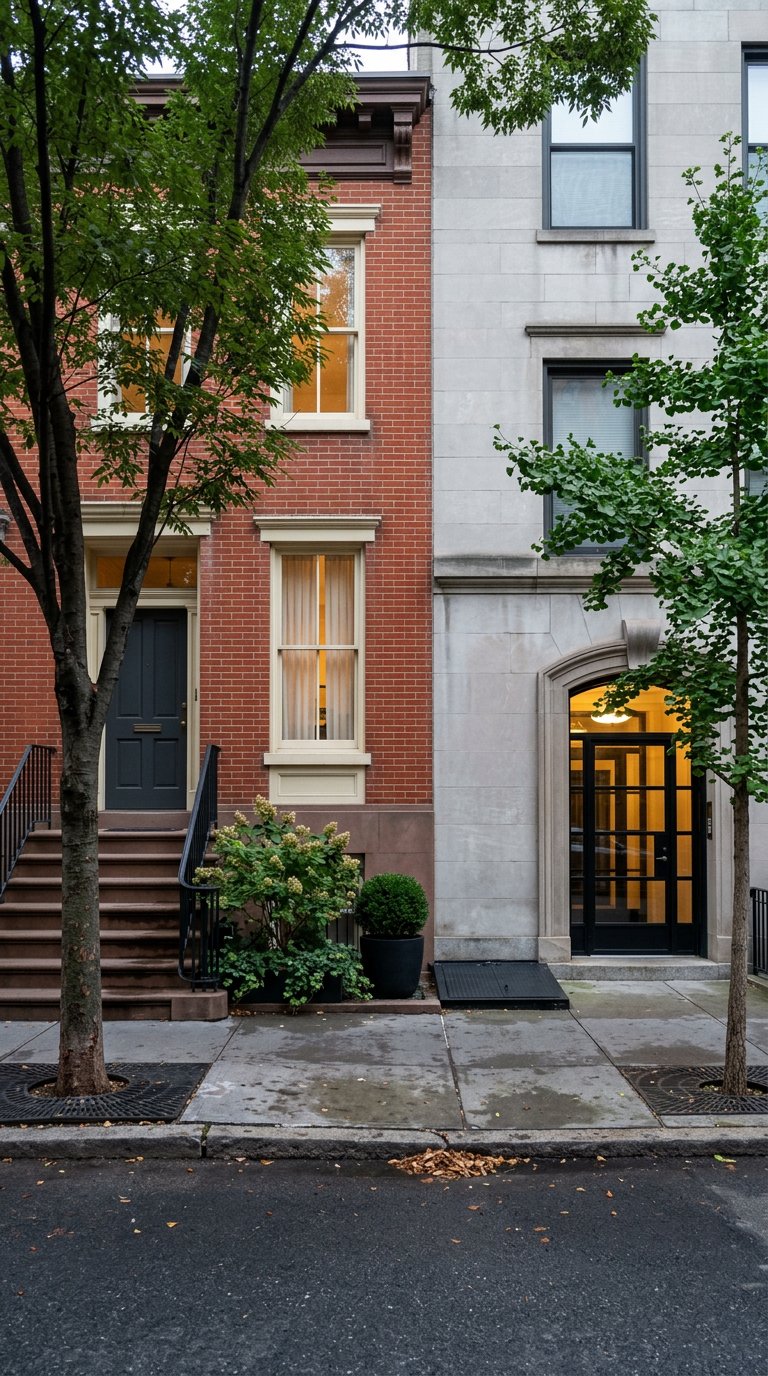
Trying to choose between Greenwood Heights and Park Slope? You are not alone. Both offer the brownstone Brooklyn feel, reliable transit, and great local amenities, but the tradeoffs in price, space, and everyday convenience are real. In this guide, you will see how the neighborhoods compare on homes, budgets, schools, transit, parks, and lifestyle so you can decide with confidence. Let’s dive in.
Greenwood Heights vs Park Slope at a glance
- Greenwood Heights: A smaller, mixed neighborhood south of Park Slope with two‑family rowhouses, modest brick buildings, and a growing number of low‑rise condos. It borders the famed Green‑Wood Cemetery and has everyday retail along 4th and 5th Avenues. Get a quick overview in the Greenwood Heights Wikipedia profile.
- Park Slope: A larger, landmarked area directly north of Greenwood Heights known for classic brownstones, wide commercial avenues, and easy access to Prospect Park. Learn more in the Park Slope Wikipedia entry.
Housing stock and pricing
Greenwood Heights homes and prices
You will find two‑family rowhouses, wood‑frame and brick homes from the early 20th century, and a steady stream of low‑rise condo conversions. Some blocks feel more industrial or mixed‑use due to proximity to Gowanus and Industry City, while others read as quiet residential. Vendor snapshots in late 2025 to early 2026 place Greenwood Heights’ median sale prices roughly in the 1.0M to 1.45M range, with variation by product type and exact block.
What this means for you: Greenwood Heights often delivers more space for the price compared with prime Park Slope brownstone blocks, especially for two‑family or renovated condo inventory.
Park Slope homes and prices
Park Slope’s signature is its deep stock of 19th‑ and early 20th‑century brownstones and townhouses, many preserved by historic‑district protections that help maintain the streetscape character. Larger co‑op and condo buildings line 4th, 5th, and 7th Avenues, with a good supply of family‑size layouts. Vendor medians in late 2025 to early 2026 often fall between about 1.4M and 2.1M, depending on the month, sub‑area, and property type. Historic protections and consistent amenities contribute to the price premium on many blocks, supported in part by NYC Landmarks Preservation Commission designations.
Tip: Always compare apples to apples. A two‑family in southern Park Slope can price differently from a house on a landmarked north Slope block. Expect ranges, not a single “true” number.
Rents at a glance
Rents vary a lot by building, amenities, and exact location. Early 2026 vendor medians often show Park Slope around 3.8k to 4.2k per month, with Greenwood Heights commonly near 3.2k to 3.6k per month. Because rental data sets can be small and product mixes differ, use building‑level comparables to get accurate estimates.
Schools and enrollment basics
Park Slope is commonly associated with several well‑known public elementary options, including P.S. 321 William Penn, along with nearby private schools such as Berkeley Carroll. Greenwood Heights typically falls within District 15, with elementary options like P.S. 172 (Beacon School of Excellence) documented here on ElementarySchools.org. For a wider neighborhood overview, see Park Slope’s Wikipedia and Greenwood Heights on Wikipedia.
Important: School assignment is address specific. Do not rely on neighborhood‑level assumptions. Before you sign, confirm eligibility for any school using the NYC Department of Education’s assignment tools and official zone maps.
Commute and transit access
Park Slope
Park Slope benefits from multiple subway lines into Manhattan and across Brooklyn. You can access the F and G at 15 St–Prospect Park and 7 Av, plus connections at the 4 Av–9 St complex. For a feel of the area, see the 15th St–Prospect Park station on Tripomatic.
Greenwood Heights
Greenwood Heights riders primarily use the BMT Fourth Avenue Line via 36th St, 25th St, and Prospect Avenue stations, with service patterns that can include the D, N, R, and W. It is typically one or two stops farther from Manhattan compared with Park Slope’s Prospect Park edge, yet still offers multiple direct lines. Neighborhood details are summarized on the Greenwood Heights Wikipedia page.
How to compare door‑to‑door times:
- Pick two realistic addresses you might live at in each neighborhood.
- Test a morning and evening trip to your office using the MTA trip planner.
- Repeat for a weekend run to a frequent destination, like Midtown, DUMBO, or Downtown Brooklyn.
Parks, green space, and amenities
Park Slope
Living by Prospect Park is a major perk. The park spans 526 acres with playgrounds, a bandshell, a zoo, ballfields, and cultural programming. Review facilities and maps via NYC Parks’ Prospect Park page. Park Slope’s 5th and 7th Avenues offer a deep roster of cafés, restaurants, boutiques, and services that make daily life convenient and walkable.
Greenwood Heights
Greenwood Heights has neighborhood‑scale retail on 4th and 5th Avenues, including bakeries, bodegas, small shops, and restaurants. You also have easy access to Industry City’s dining and creative venues to the west. A unique benefit is adjacency to Green‑Wood Cemetery, a roughly 478‑acre National Historic Landmark that many residents use like a large green space for quiet walks and skyline views. If you plan to visit regularly, scan the Green‑Wood visitor rules for hours and guidelines. Local playgrounds and pocket parks round out the options.
Value tradeoffs: who each suits
When Greenwood Heights shines
- Better entry pricing: Buyers often find lower medians than Park Slope, especially for two‑family houses and renovated low‑rise condos.
- Mixed‑use potential: You can find live‑over‑store or small mixed‑use buildings along 4th and 5th Avenues, which can appeal to entrepreneurs and creatives seeking flexible space.
- Quieter blocks and variety: Some streets feel tucked away, though character can change quickly from block to block.
When Park Slope commands a premium
- Brownstone fabric and landmarks: A consistent, historic streetscape and landmark protections support long‑term value on many blocks.
- Prospect Park adjacency: Immediate access to a flagship city park remains a top quality‑of‑life driver.
- Concentration of schools and amenities: A dense mix of public and private school options and well‑established commercial corridors add everyday convenience.
How to decide: a simple plan
- Verify school eligibility by your exact street address using official NYC DOE tools. Zones can be counter‑intuitive and are subject to change.
- Compare 2 to 3 like‑for‑like properties in each neighborhood. Match by product type and size, and record the data source and snapshot month. Expect ranges, not absolutes.
- Do block‑level visits at different times. Morning rush, late evening, and weekend checks will reveal noise, parking, street life, and retail patterns.
- Review physical site risks. Parts of Greenwood Heights may show elevated flood risk in some data sets. If a home interests you, investigate with your attorney and inspector.
- If you own a small business or work from home, look for mixed‑use or live/work opportunities in Greenwood Heights and weigh them against retail availability and leasing patterns in Park Slope.
Ready to compare homes?
If you want brownstone Brooklyn charm, both neighborhoods deliver. Park Slope tends to win on immediate park access and a dense amenity network, which supports stronger pricing. Greenwood Heights often gives you more budget flexibility, mixed‑use potential, and a quieter, creative feel near a major cultural green space. If you would like tailored comps, block‑by‑block guidance, and help navigating school and transit tradeoffs, we are here to help. Reach out to Justin Martinez to start a focused search.
FAQs
How do Park Slope and Greenwood Heights prices compare in 2026?
- Vendor medians often place Park Slope around 1.4M to 2.1M and Greenwood Heights around 1.0M to 1.45M, with wide variation by sub‑area, property type, and snapshot month.
Are there brownstones in Greenwood Heights?
- Yes. You will find brownstone‑style rowhouses and renovated two‑families, though Park Slope has a denser, landmarked brownstone core that shapes pricing and streetscape.
Which neighborhood has the better commute to Manhattan?
- Both are well served. Park Slope has F/G service near Prospect Park and connections at 4 Av–9 St, while Greenwood Heights uses the 36th, 25th, and Prospect Ave stations on the Fourth Avenue Line. Compare exact door‑to‑door times with the MTA trip planner.
What should I know about school enrollment if I move?
- School assignment is address specific. Park Slope addresses are often associated with options like P.S. 321, while Greenwood Heights is commonly linked with District 15 schools such as P.S. 172. Always verify eligibility with NYC DOE tools.
Is Green‑Wood Cemetery like a park for Greenwood Heights residents?
- Many residents enjoy it as a large, park‑like green space with scenic walks and events. Review current hours and guidelines in the Green‑Wood visitor rules before planning regular visits.