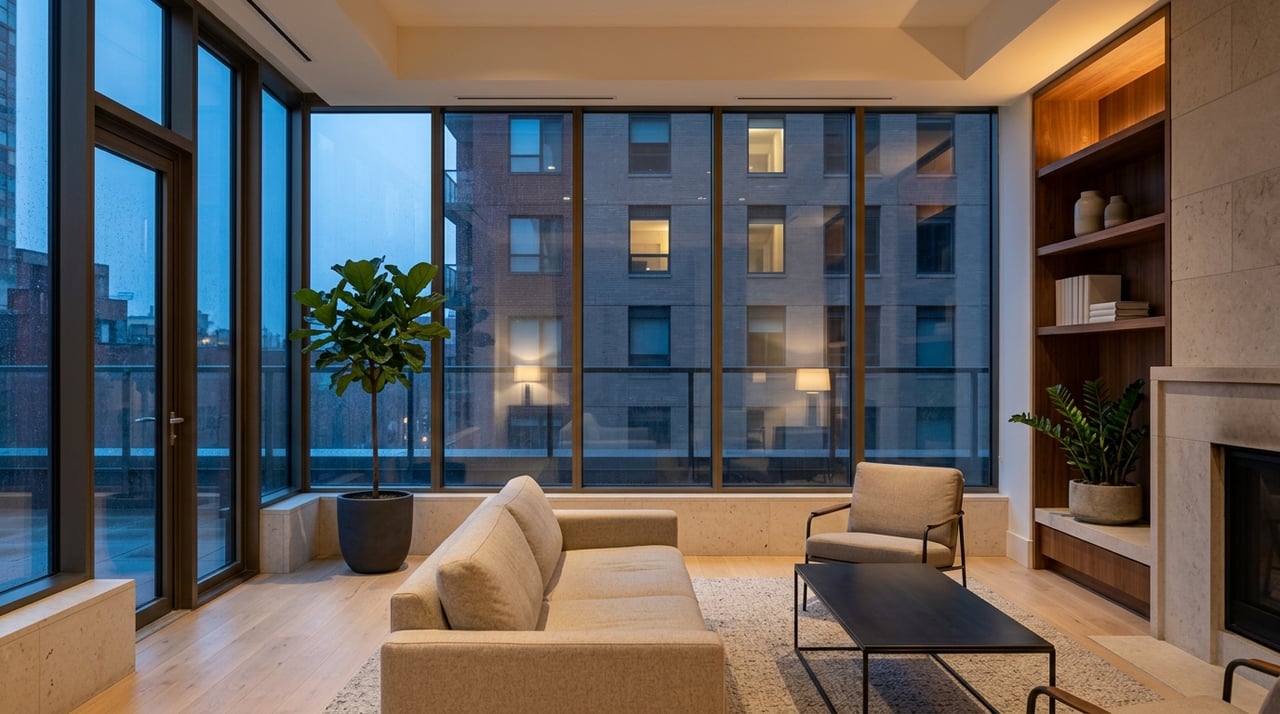
If buying your first Manhattan condo feels like trying to hit a moving target, Midtown East may be one of the few places where you can slow down and make a smart decision. You are still shopping in an expensive market, but current data points to solid inventory, longer days on market, and a more measured pace than many buyers expect. That matters when you are balancing price, monthly costs, commute needs, and the reality of NYC closing expenses. Let’s dive in.
Why Midtown East Works
For many first-time buyers, Midtown East stands out because it offers something rare in Manhattan: choice. StreetEasy’s Midtown East market page shows about 1,000 listings for sale, including 444 condo listings, with a median asking price of $950,000 and a median size of 1,095 square feet.
That does not make Midtown East cheap, but it does make it easier to compare buildings, layouts, and monthly carrying costs before you commit. In a first purchase, that extra breathing room can help you avoid rushing into the wrong apartment.
The broader market tone also looks relatively buyer-friendly. Redfin’s Midtown East housing market data reported a February 2026 median sale price of $1.43 million and 110 median days on market, while StreetEasy and Realtor.com data cited in the research point in the same direction: buyers often have time to be selective rather than reflexively overbid.
What Your Budget Buys
Your first Midtown East condo will most likely be a studio or a smaller one-bedroom. The key is understanding how quickly pricing can rise as you add space.
Studios in Midtown East
Current Midtown East studio listings on StreetEasy show that studios can offer a real entry point into the neighborhood, though the entry point is still high by national standards. Examples in the current inventory include a 442-square-foot studio at $695,000 and a 558-square-foot studio at $965,000.
Other studio condos in the neighborhood currently sit around 500 to 520 square feet and roughly $660,000 to $765,000. If you want to own in Manhattan without stretching into a larger loan, this is often where the numbers start to make sense.
One-Bedroom Price Range
For many first-time buyers, a one-bedroom feels like the more practical long-term choice. Current condo examples in Midtown East range from about 616 to 770 square feet and roughly $850,000 to $1.65 million.
One example is 135 East 47th Street #5A at Monogram New York, a 616-square-foot sponsor unit listed at $1,182,400. Other one-bedroom condos shown in the current market include 700 square feet for $850,000, 770 square feet for $1,095,000, and 673 square feet for $1,648,000.
Two-Bedroom Reality Check
Two-bedrooms exist in the Midtown East condo market, but they often push many first-time buyers out of their comfort zone. Current inventory generally falls around 1,000 to 1,207 square feet and about $1.325 million to $2.75 million, though there is a smaller 781-square-foot two-bedroom at $949,000 in the broader market.
For many buyers, the more realistic leap is from studio to one-bedroom, not straight to a full-sized two-bedroom. That is often the sweet spot between livability and financial flexibility.
Why Amenities Matter
In Midtown East, you are not just buying interior square footage. You are often buying into a building’s service level, staffing, and amenity package.
Many condo buyers here will encounter full-service buildings with features like doormen, concierges, elevators, gyms, package rooms, and roof decks. At Monogram New York, the current listing for #5A includes a full-time doorman, concierge, elevator, live-in super, package room, storage space, gym, and roof deck.
Another example from the research is The Corinthian at 330 East 38th Street, where current inventory highlights amenities such as concierge service, a full-time doorman, elevator, live-in super, parking, playroom, gym, swimming pool, and deck. These examples show the type of lifestyle and convenience many buyers are weighing in Midtown East.
Look Closely at Monthly Costs
This is where many first-time buyers need to pause and run the numbers twice. A condo’s sticker price is only part of the monthly picture.
The Monogram sponsor unit is a useful example. Its listing shows $1,116 per month in common charges and $1,283 per month in taxes, for a total of $2,399 per month before mortgage costs.
That means a compact one-bedroom can carry a meaningful monthly load even before principal, interest, insurance, or utilities enter the picture. If you are comparing multiple buildings, focus on your full monthly payment, not just the purchase price.
Sponsor Units and New Development
If you are shopping Midtown East condos, you may come across sponsor units, especially in new development or conversion buildings. StreetEasy defines a sponsor unit as a unit being sold for the first time, typically by the building or developer.
That can be appealing to first-time buyers who want a new unit and a straightforward purchase path. Still, it is important to review the details carefully.
According to the New York State Attorney General’s guidance on buying a co-op or condo, the offering plan controls the sponsor’s obligations related to unit size, construction, and ancillary spaces such as recreational facilities, parking spaces, or rooftop cabanas. In practical terms, you should rely on the formal documents, not just a sales brochure or verbal description.
Closing Costs to Plan For
NYC condo closing costs can surprise first-time buyers, especially when the purchase price approaches or crosses $1 million. Midtown East buyers should understand a few taxes that can materially affect the cash needed at closing.
Mansion Tax Threshold
New York State’s mansion tax guidance states that residential conveyances of $1 million or more trigger a 1% mansion tax paid by the buyer. Since residential real property includes an individual condominium unit, that threshold matters in Midtown East, where many one-bedrooms and most two-bedrooms can cross the line.
Mortgage Recording Tax
If you are financing your purchase, mortgage recording tax is another major line item. According to NYC tax methodology materials, the combined state and city mortgage recording tax is 2.05% on mortgages under $500,000 and 2.175% on residential mortgages of $500,000 or more.
Transfer Tax Context
The NYC Real Property Transfer Tax page shows a rate of 1% for residential transfers of $500,000 or less and 1.425% for transfers above $500,000. This is usually part of the seller’s closing costs, but it still helps to understand the full transaction structure when comparing resale and sponsor opportunities.
How to Buy Without Overextending
The current Midtown East market data supports a disciplined approach. With a 97% sale-to-list ratio and roughly 105 to 110 median days on market cited in the research, this is a market where careful comparison is often possible.
That does not mean every seller will negotiate the same way, and it does not guarantee leverage in every building. It does mean you may have room to think clearly, review documents carefully, and avoid chasing an apartment that does not fit your budget.
A practical framework can help:
- Set a hard monthly ceiling that includes mortgage, common charges, and taxes
- Decide whether a studio or one-bedroom fits your real day-to-day needs
- Compare building service levels against costs, not just amenities on paper
- Review sponsor and new-development documents carefully
- Keep extra cash available for closing costs and taxes
For first-time buyers, this kind of structure matters more than trying to predict every market shift. A smart first purchase is usually the one that still feels sustainable after move-in day.
Transit Is a Real Advantage
Midtown East also works well for buyers who prioritize connectivity. Grand Central Terminal serves Metro-North’s Harlem, Hudson, and New Haven lines, connects to the Long Island Rail Road at Grand Central Madison, and links to subway and bus service at Grand Central-42 Street.
The same MTA resource notes subway service at Grand Central-42 Street on the 4, 5, 6, and 7 lines. For many buyers, that level of access is a big part of Midtown East’s value proposition.
If your daily routine depends on moving across Manhattan, into outer boroughs, or out to the suburbs, transit access can be just as important as square footage. That is one reason Midtown East can make sense as a first purchase even when prices are high.
The Bottom Line
Midtown East is not an entry-level market in the usual sense, but it can be a workable first Manhattan purchase if you value transit access, full-service buildings, and a market where you can still compare options carefully. The neighborhood offers meaningful condo inventory, a wide range of unit types, and a buyer experience that may feel more measured than in tighter Manhattan submarkets.
If you are weighing a Midtown East condo purchase and want help thinking through budget, building tradeoffs, and the full NYC buying process, Justin Martinez can help you build a strategy that fits your goals.
FAQs
What price range should a first-time buyer expect for a Midtown East condo?
- Based on current listings in the research, studios are often around $660,000 to $965,000, one-bedrooms commonly range from about $850,000 to $1.65 million, and many two-bedrooms start above that.
Are Midtown East condos buyer-friendly right now?
- Current research suggests a relatively buyer-friendly environment, with about a 97% sale-to-list ratio and median days on market around 105 to 110, which can give you more room to compare options.
What monthly costs matter beyond the purchase price for a Midtown East condo?
- You should factor in common charges, property taxes, and mortgage costs, since a condo with a lower asking price can still carry high monthly expenses.
What is a sponsor unit in a Midtown East condo building?
- StreetEasy defines a sponsor unit as a unit being sold for the first time, typically by the building or developer, which is common in new-development condos and some conversions.
Do first-time buyers in Midtown East need to plan for mansion tax?
- Yes, if the purchase price is $1 million or more, New York State imposes a 1% mansion tax on the buyer.
Why do first-time buyers consider Midtown East for a Manhattan purchase?
- Many buyers are drawn to Midtown East for its condo inventory, full-service building options, and strong transit access through Grand Central Terminal and nearby subway lines.